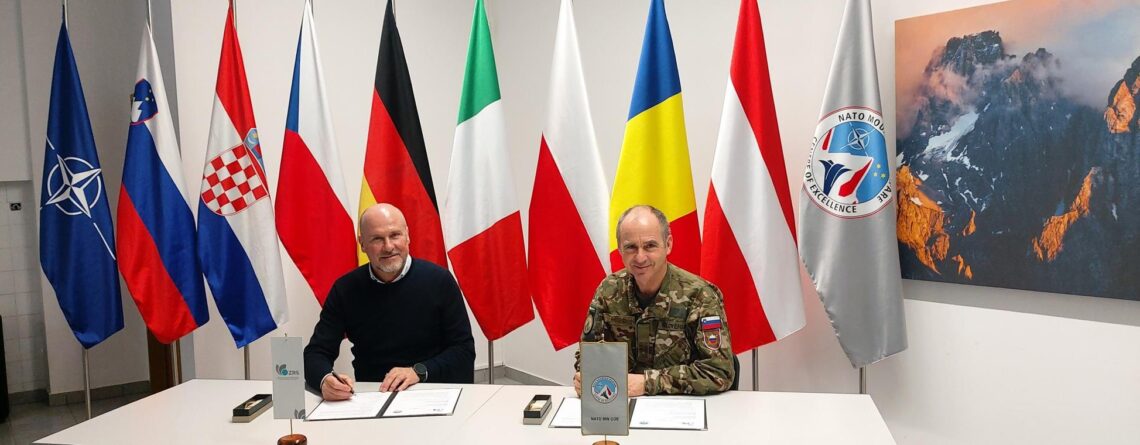
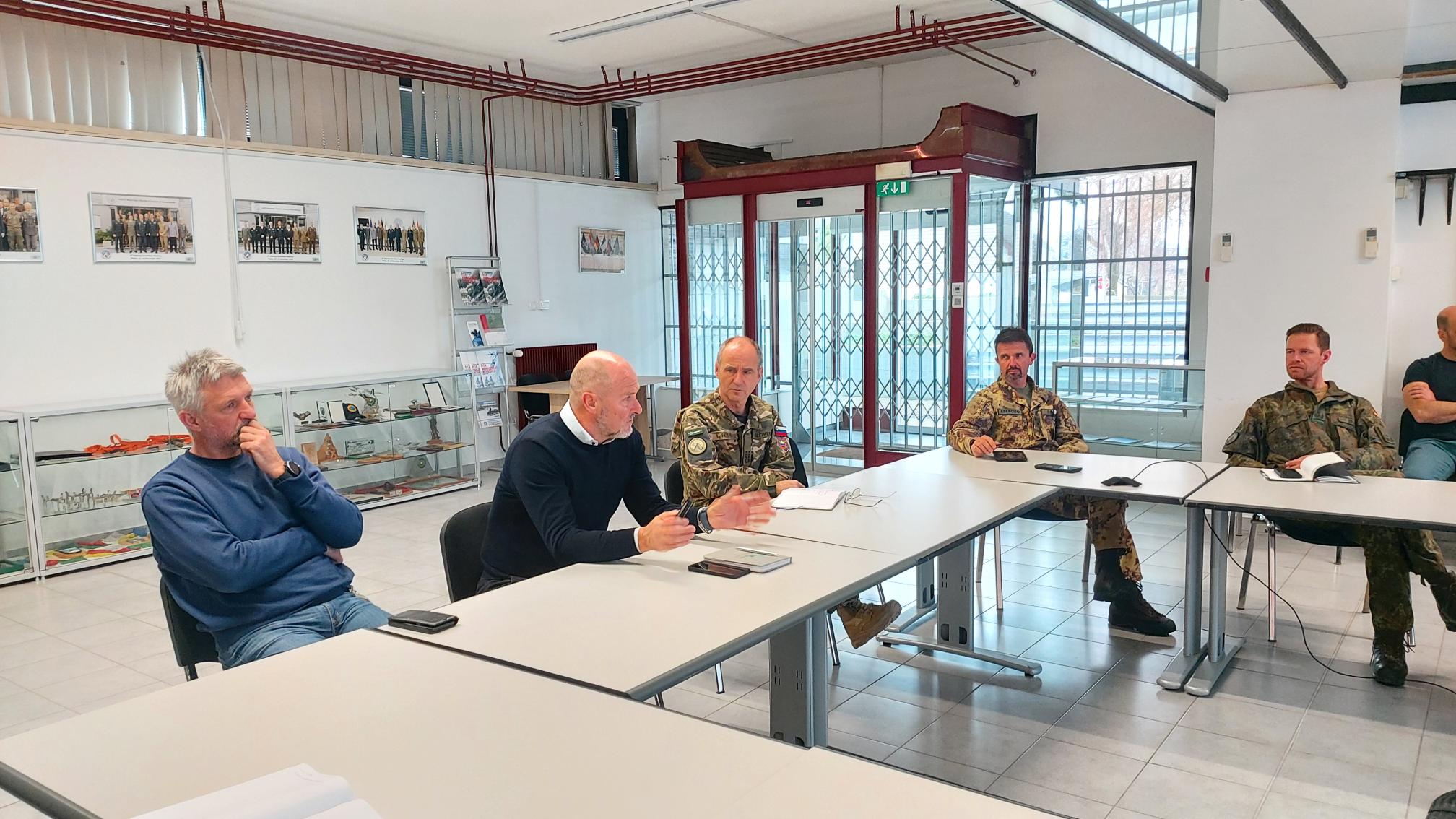
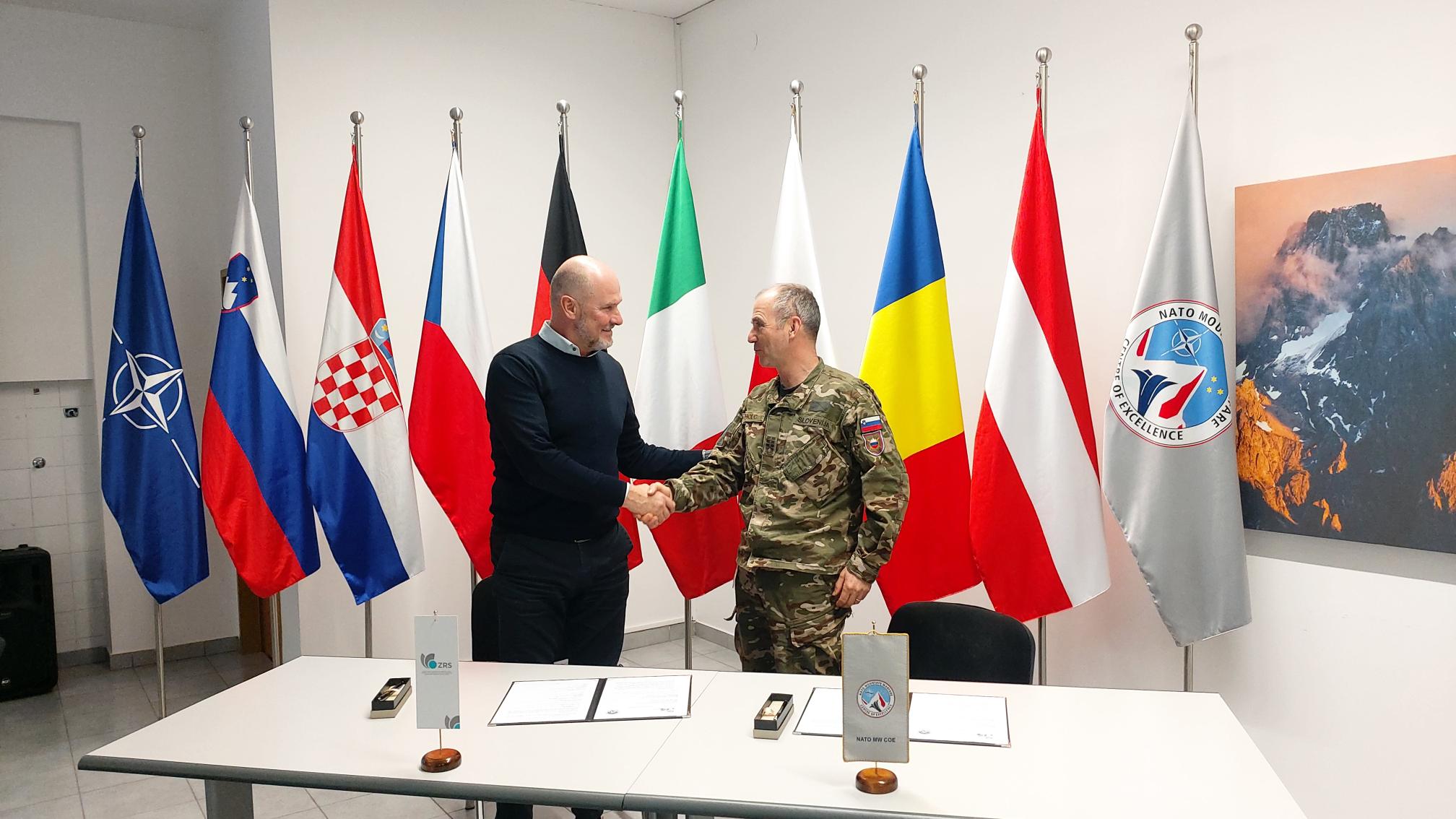
Alongside the presentation of results from exoskeleton testing in a military environment, the NATO MW COE signed a Letter of Cooperation (LOC) with the Science and Research Centre Koper (ZRS Koper). The LOC was signed by Colonel Leon Holc on behalf of NATO MW COE and Dr. Rado Pišot on behalf of ZRS Koper, to further strengthen joint research in wearable technologies, biomechanics, and human performance enhancement in demanding operational environments.
This partnership will enable cooperation of both Centers on joint NATO and EU projects, continued development of testing protocols, in-depth analysis of physiological workload, and the pursuit of innovative solutions to better support military personnel during physically demanding missions.
ZRS Koper is one of NATO DIANA-recognized testing Centre’s, and collaborative projects with NATO MW COE strengthen the NATO Innovation ecosystem.
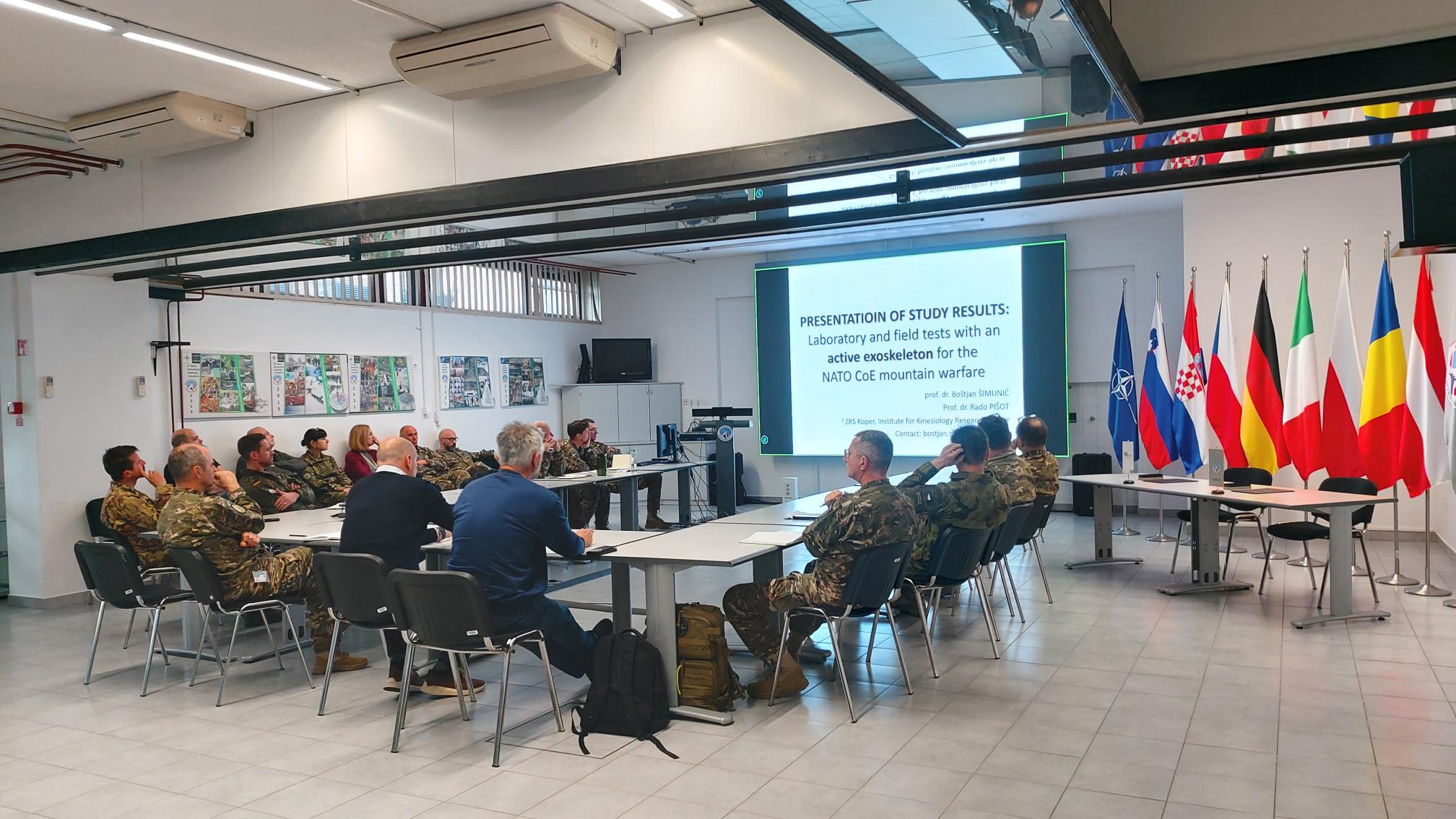
In parallel, ZRS Koper, Institute for Kinesiology Research, presented the results of the second experiment of the NATO MW COE Human Enhancement Experimentation campaign. The campaign focuses on searching for passive, semi-passive, and active exoskeleton systems and their impact on performance, physical workload, and the user experience of soldiers operating in battlefield conditions, particularly in mountainous terrain.
The first experiment, conducted in December 2024 with the Slovenian Armed Forces 132nd Mountain Regiment and ZRS Koper, evaluated a passive exoskeleton in laboratory and field conditions. The trials included load-bearing walking, bounding movements, and leopard crawling with backpacks. The results indicate that while passive systems deliver partial load relief during static postures, they fail to provide adequate support during ambulation and traversing uneven terrain.
The second experiment, conducted in November 2025 in collaboration with ZRS Koper and involving Slovenian and German mountain units, evaluated an active exoskeleton. Soldiers undertook treadmill walking tests on an incline, a mountain march with significant elevation gain, and diverse operational battlefield tasks in full combat gear.
The active exoskeletons, despite some limitations, show potential to support soldiers in demanding mountainous environments. A focused redesign for military use could significantly enhance soldiers’ and units’ endurance on the modern battlefield.