At the NATO Mountain Warfare Centre of Excellence (MW COE), strengthening cooperation between operational units, research institutions, and innovative companies remains an essential tool for implementing an innovation mindset and advancing NATO’s adaptation to complex environments.
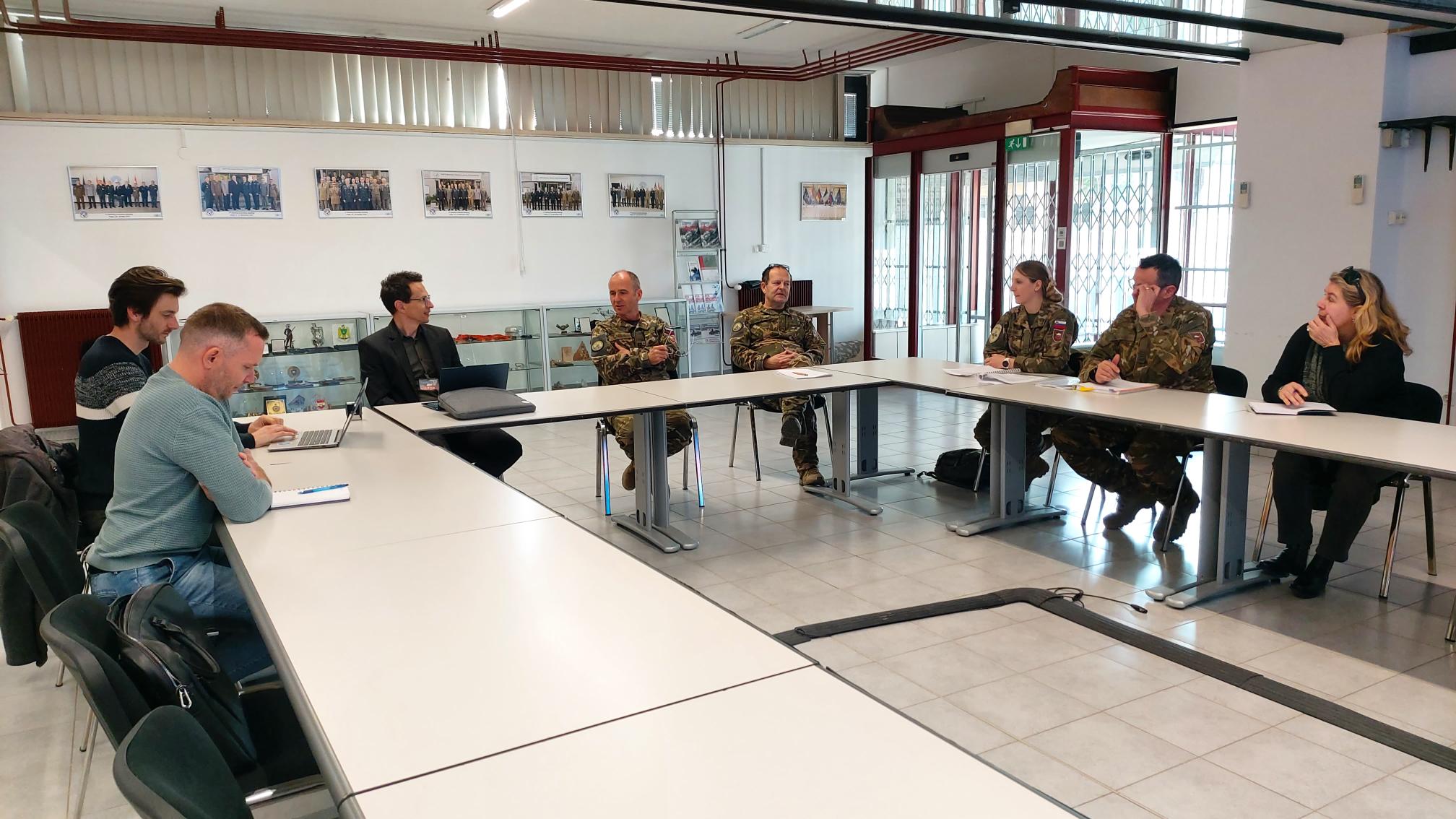
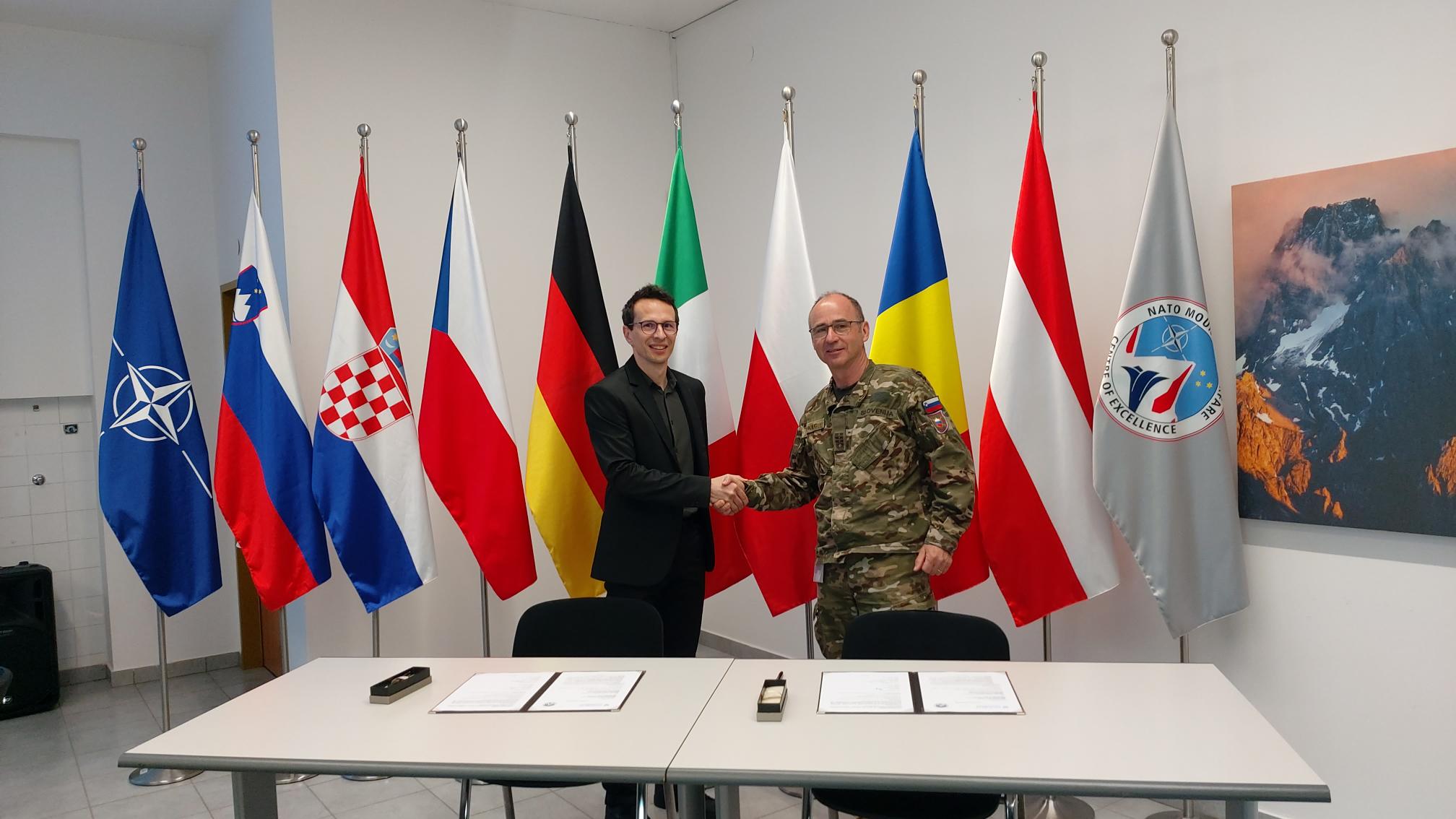
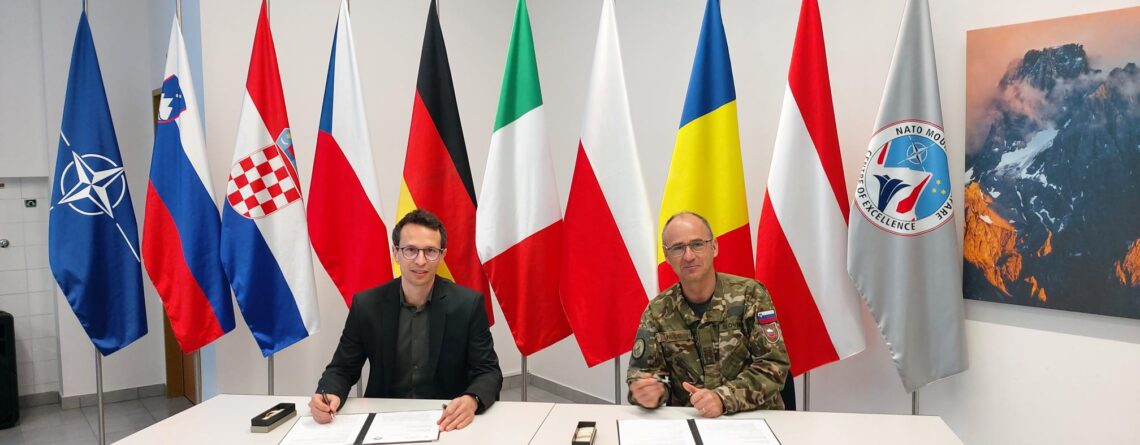
In this context, MW COE Director Col Leon Holc and Microbium Director Gregor Zupin signed a letter of cooperation formalising collaboration in the field of water testing technologies adapted for extreme environments. The signing was attended by representatives from the Slovenian Ministry of Defence (MOD) and the SAF Veterinary Units Food Hygiene Department. The event took place in parallel with the second meeting of the experiment working group responsible for validating the experiment results.
This initiative builds on discussions initiated during the NATO DIANA Defence & Security Days 2026 in Munich, where the Director of MW COE first engaged with Microbium representatives regarding potential cooperation in testing innovative solutions for operations in extreme environments. The event, organised ahead of the Munich Security Conference, brought together NATO entities, innovators, and industry leaders to accelerate the adoption of emerging technologies addressing NATO’s most pressing operational challenges.
The collaboration supports NATO DIANA’s challenge on Operations in Extreme Environments, which seeks dual-use technologies capable of sustaining personnel and equipment in harsh climates characterised by rugged terrain, limited infrastructure, and severe weather conditions.
To support this effort, MW COE is conducting a water testing experiment in mountainous extreme conditions, carried out in parallel with an ongoing MW COE training event. The experiment evaluates portable water purification and biological monitoring technologies capable of operating in high-altitude and low-infrastructure environments. Reliable access to safe drinking water remains a critical enabler for small units operating in remote mountain terrain, where resupply is limited and environmental contamination can pose serious health risks.
The testing environment reflects the “middle ground survival” conditions typical for mountain warfare, where forces operate between valley settlements and high alpine terrain. These locations combine extreme temperature fluctuations, limited logistics, and difficult mobility conditions, providing an ideal operational laboratory for testing innovative survival technologies.
The experiment is embedded within the hypothetical operational scenario “Triglav Shadow.” In this scenario, Allied forces conduct stabilisation operations in a mountainous region where hybrid adversaries disrupt logistics and intentionally contaminate local water sources to hinder deployed units. Small manoeuvre elements operating in dispersed positions must therefore rely on autonomous and resilient water purification systems capable of ensuring a safe water supply under extreme environmental conditions.
Within this scenario framework, the MW COE experiment evaluates how innovative solutions can support distributed operations, sustainment of small units, and resilience in degraded environments. Technologies under assessment include portable purification devices, biological contamination detection systems, and low-energy solutions suitable for expeditionary use.
Such experimentation directly supports the goals of NATO DIANA by bridging the gap between innovation and operational adoption. Mountain environments provide a uniquely demanding testing ground where technologies must function reliably despite altitude, weather exposure, and limited logistics. By integrating innovation testing into realistic training environments, MW COE contributes to NATO’s broader effort to ensure that emerging technologies are not only developed but also validated, adapted, and ready for operational use in the most challenging environments where Allied forces may need to operate.