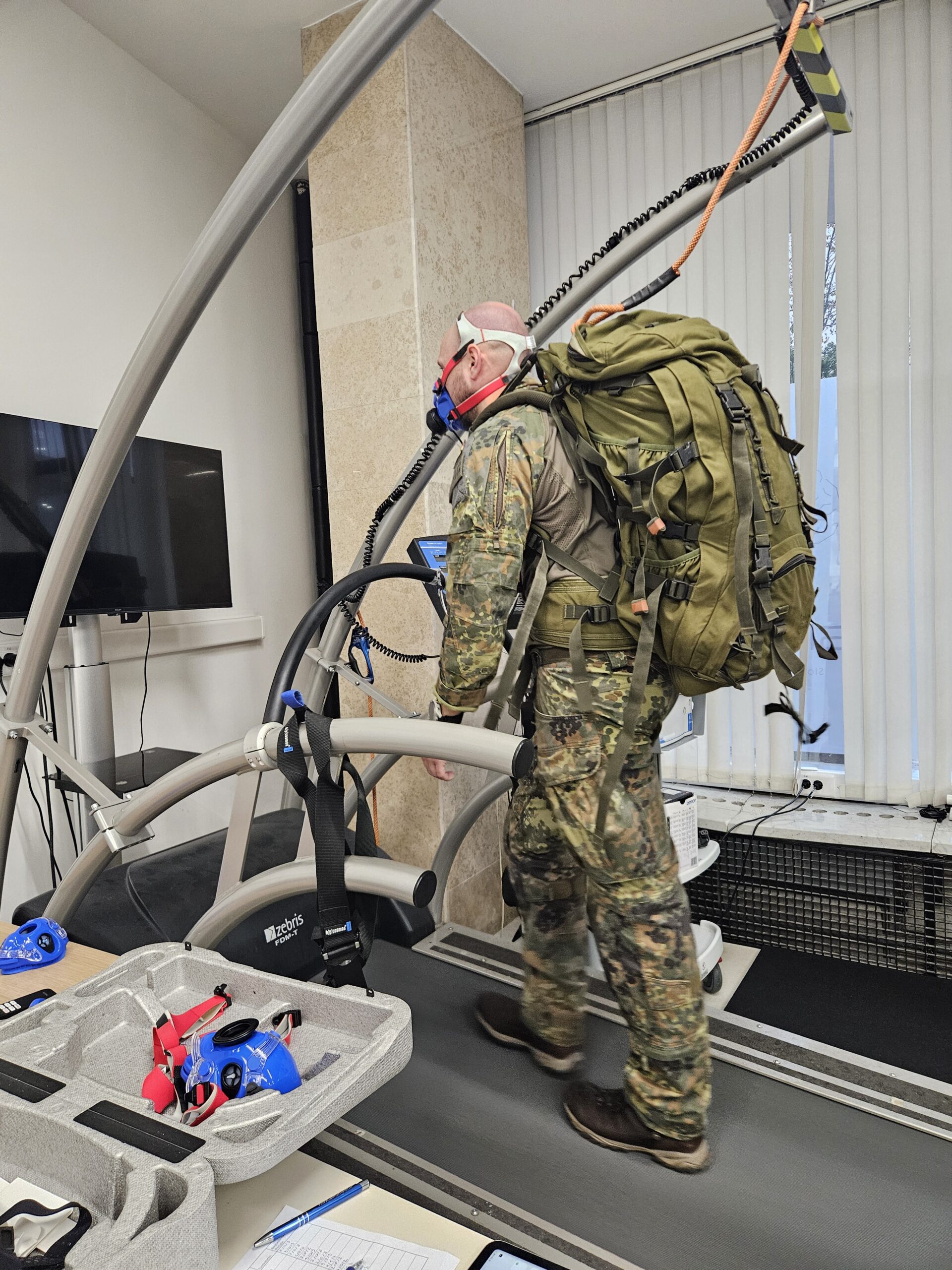
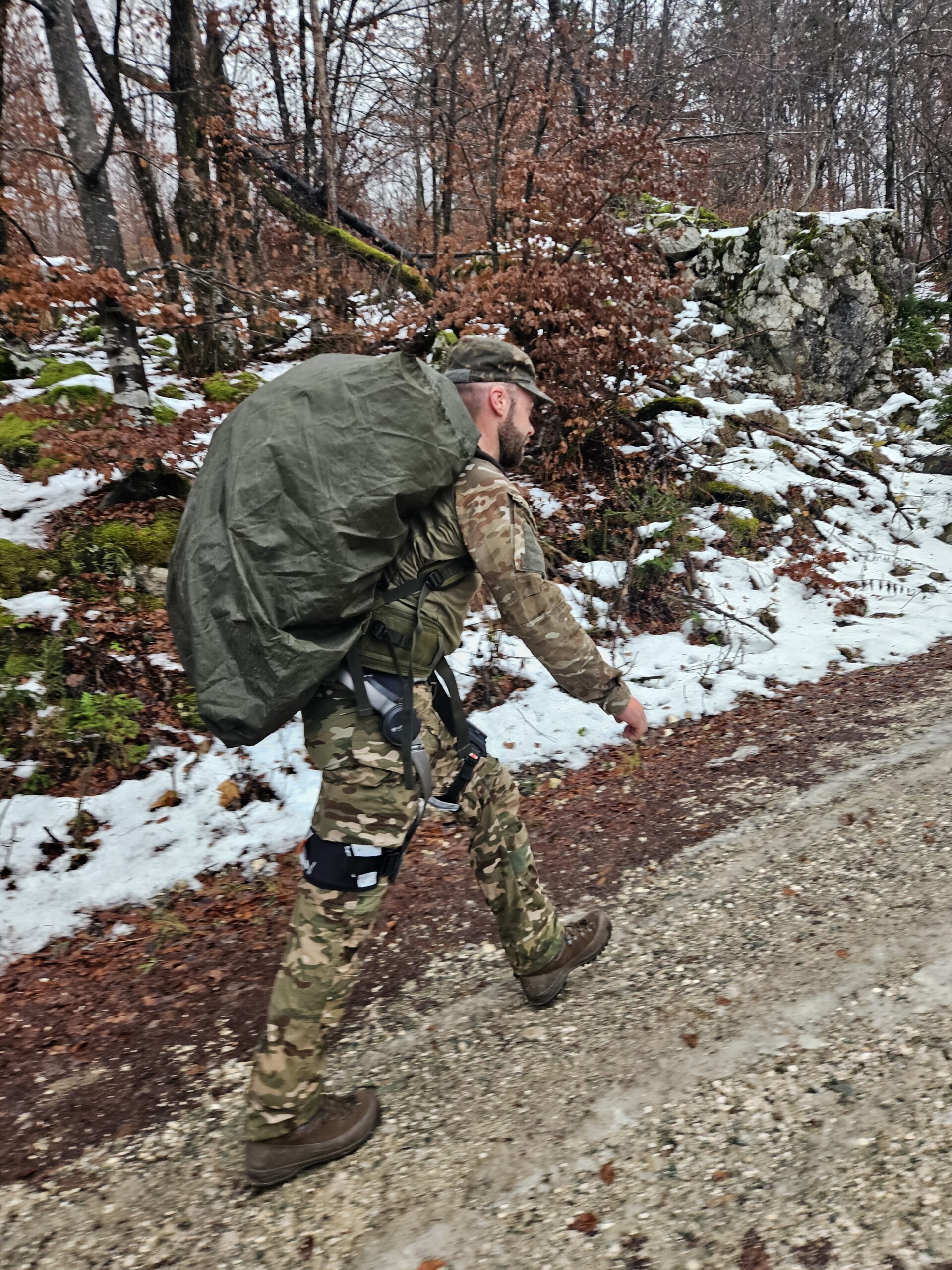
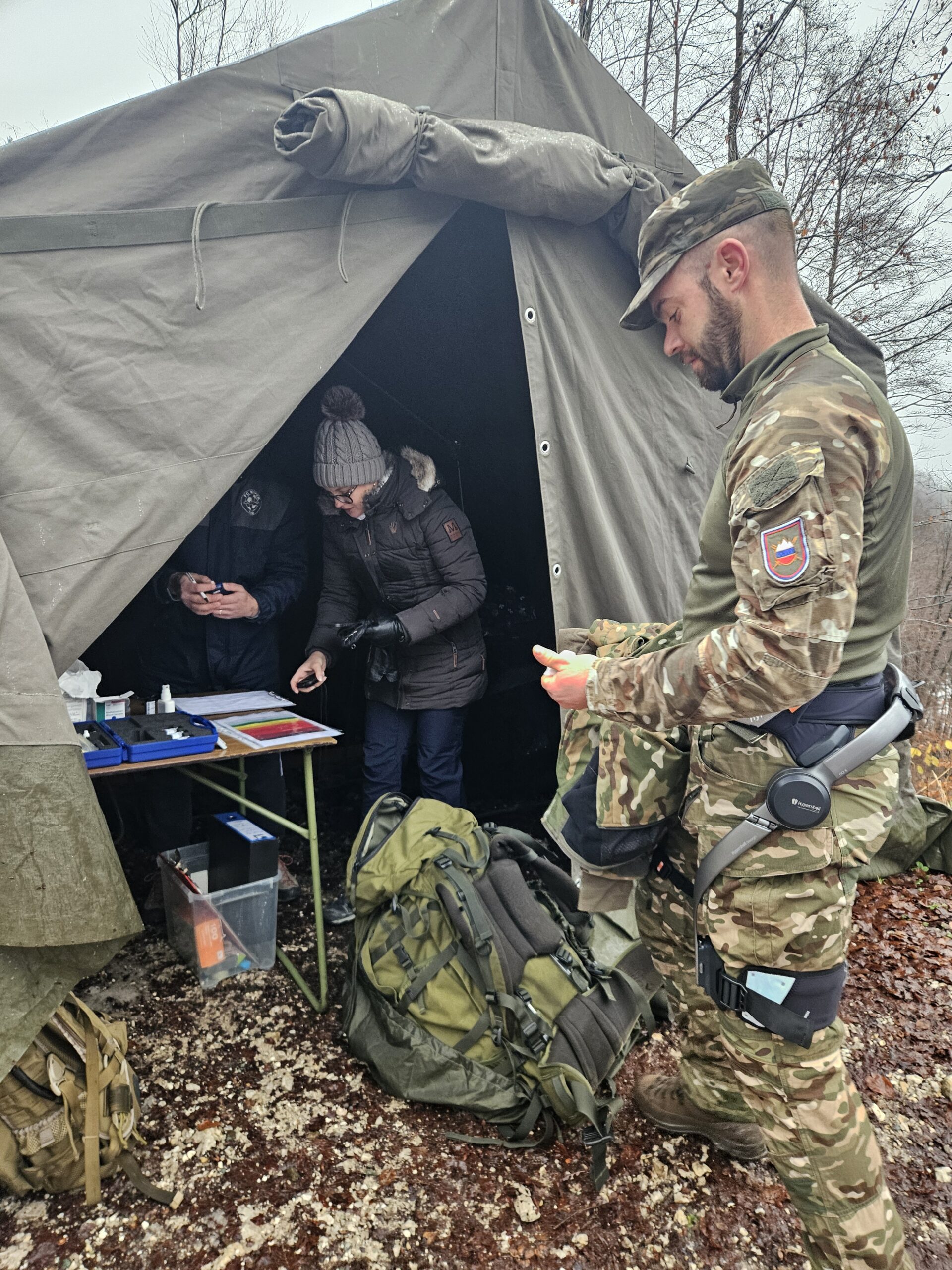
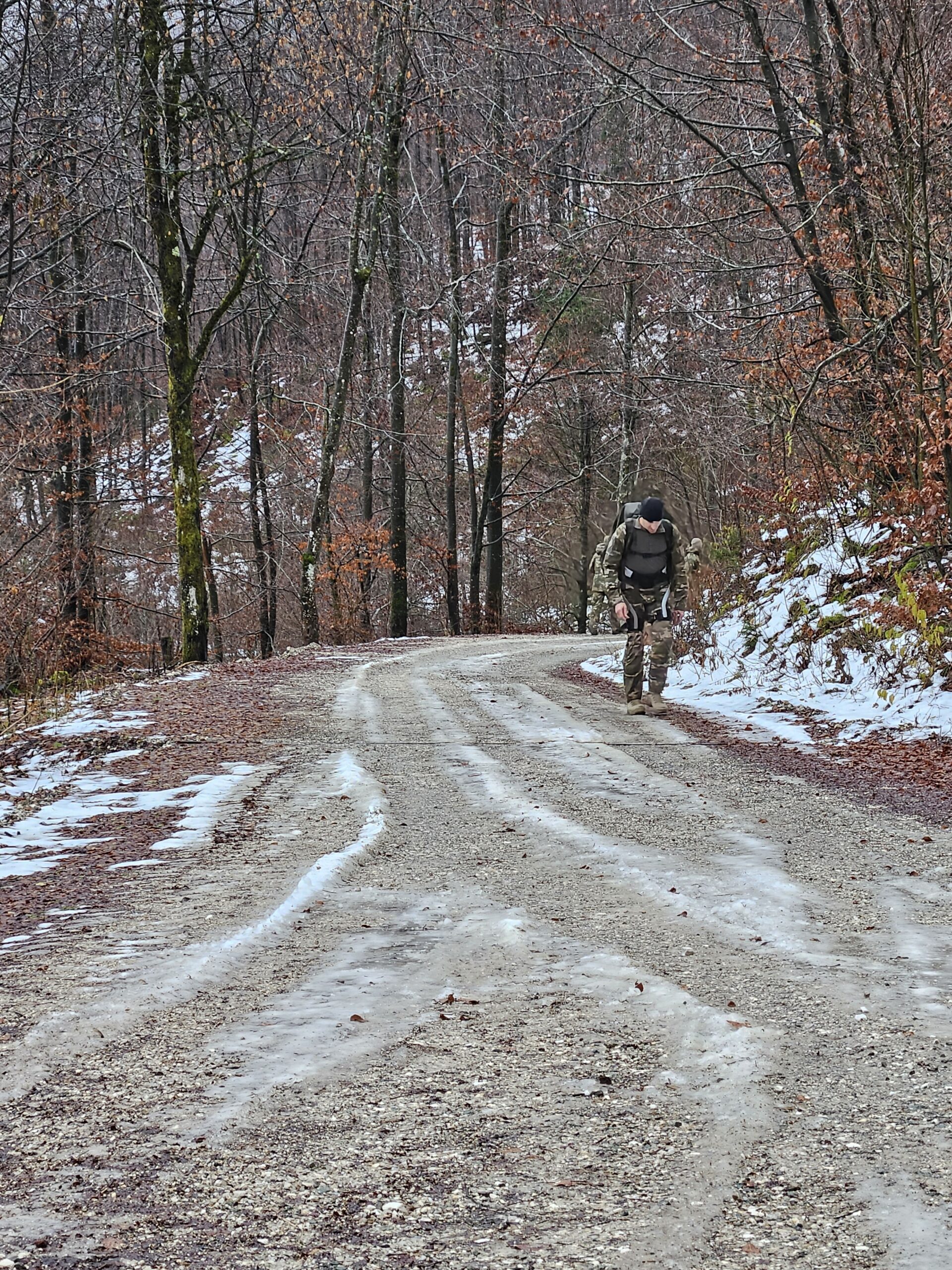
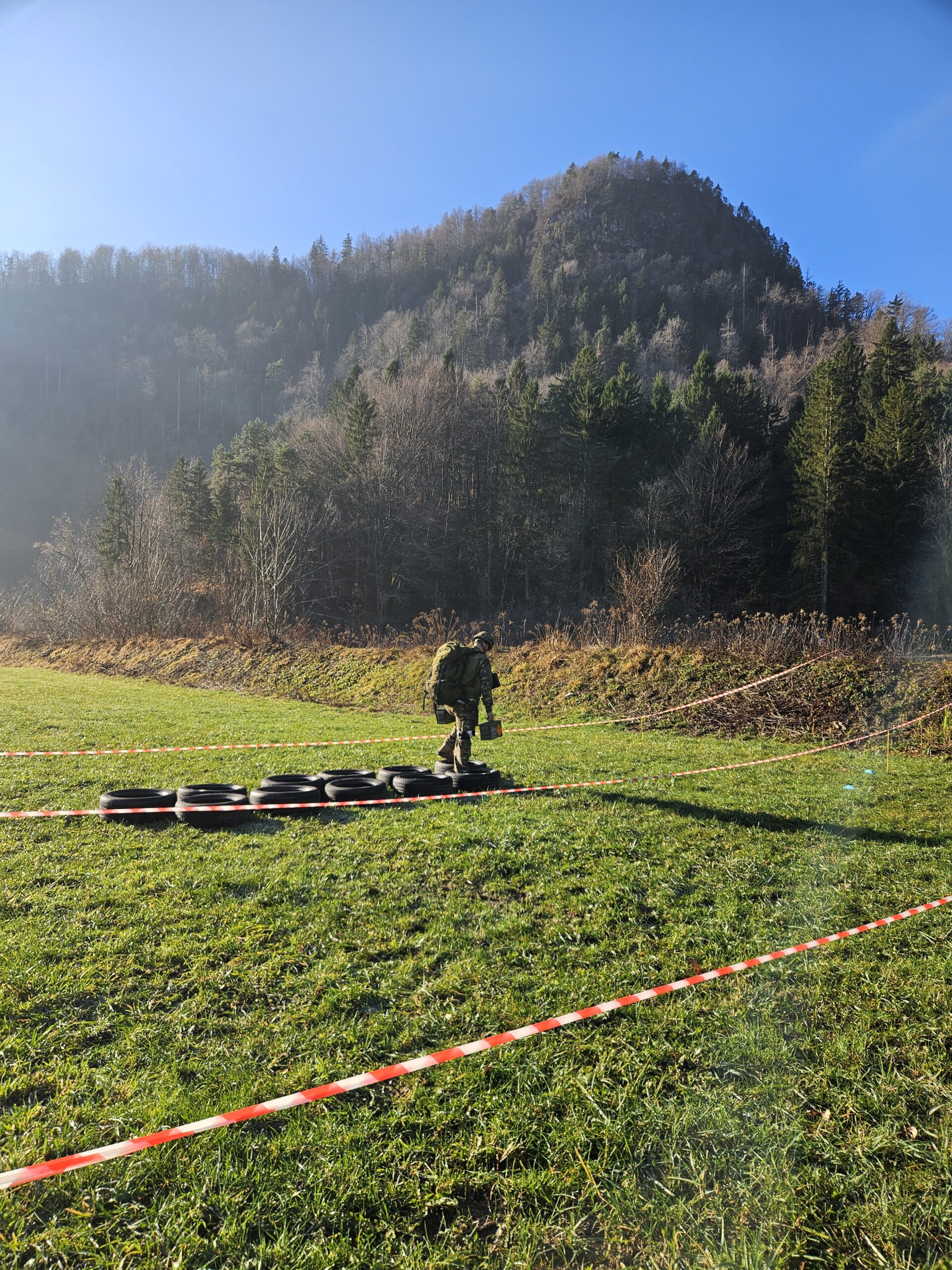
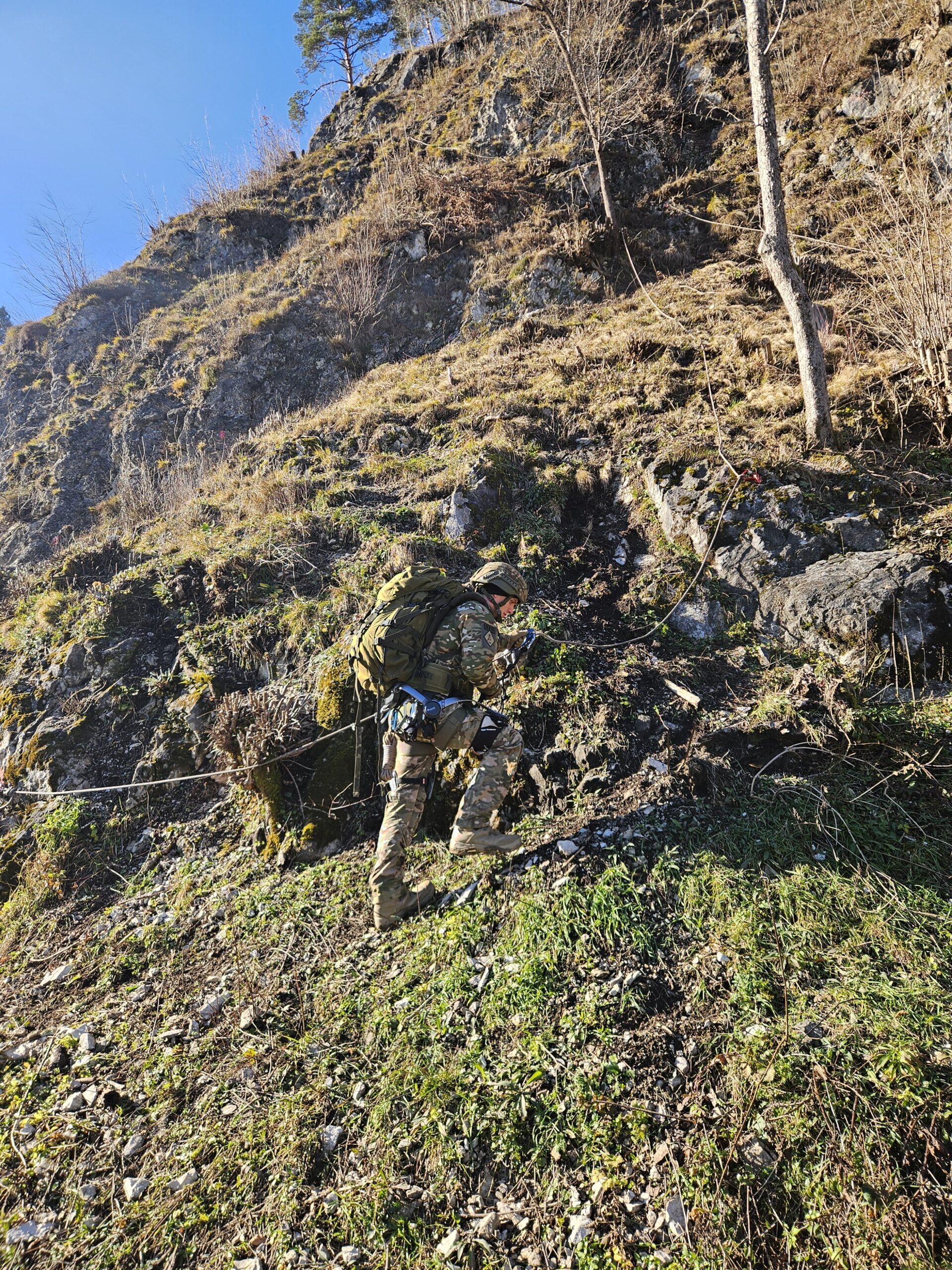
A five-day study was conducted in November 2025, in cooperation with the Science and Research Centre Koper (SRC Koper), to assess the performance and usability of the active exoskeleton Hypershell X for military use under both laboratory and field conditions. The study involved 20 soldiers from the Slovenian 132nd Mountain Battalion and the German GebJgBtl 232 Mountain Infantry Battalion, all of whom performed tasks in full combat gear with a 20 kg load.
The experimental protocol, adopted from the Consensus paper on testing and evaluation of military exoskeletons for the dismounted combatant (Mudie et al., https://doi.org/10.1016/j.jsams.2018.05.016), included treadmill walking tests at 0% and 10% incline, a 2.5 km mountain march with a 300 m elevation gain, and field-based functional tests involving rope fences, obstacle negotiation, load carrying, casualty dragging, sprinting, crawling, and grenade throwing. Each task was performed once with and once without the exoskeleton. Objective measures included oxygen consumption (VO₂), heart rate, blood lactate concentration, task completion time, and ratings of perceived exertion (RPE). User experience was evaluated using structured questionnaires.
Overall, the exoskeleton reduced physical effort, primarily minor, with some participants noting slight increases in task execution speed. The device was perceived as most beneficial during walking tasks. Comfort issues were reported in the lower back, waist, and knees, indicating a need for improved ergonomics and padding, marking a difference between civilian and military use. Technical concerns primarily related to battery performance and occasional difficulties with system adjustments.
Most participants reported that the exoskeleton was relatively easy to don and adjust; however, initial awkwardness and movement restrictions were noted. Post-use feedback indicated reduced fatigue and more effortless movement for many participants, while a subset reported discomfort or limited mobility.
These findings suggest that the Hypershell X exoskeleton has the potential to support soldiers during prolonged load-bearing activities, particularly in mountainous environments. However, ergonomic refinement and battery reliability remain critical areas requiring redesign for military use before broader operational deployment.