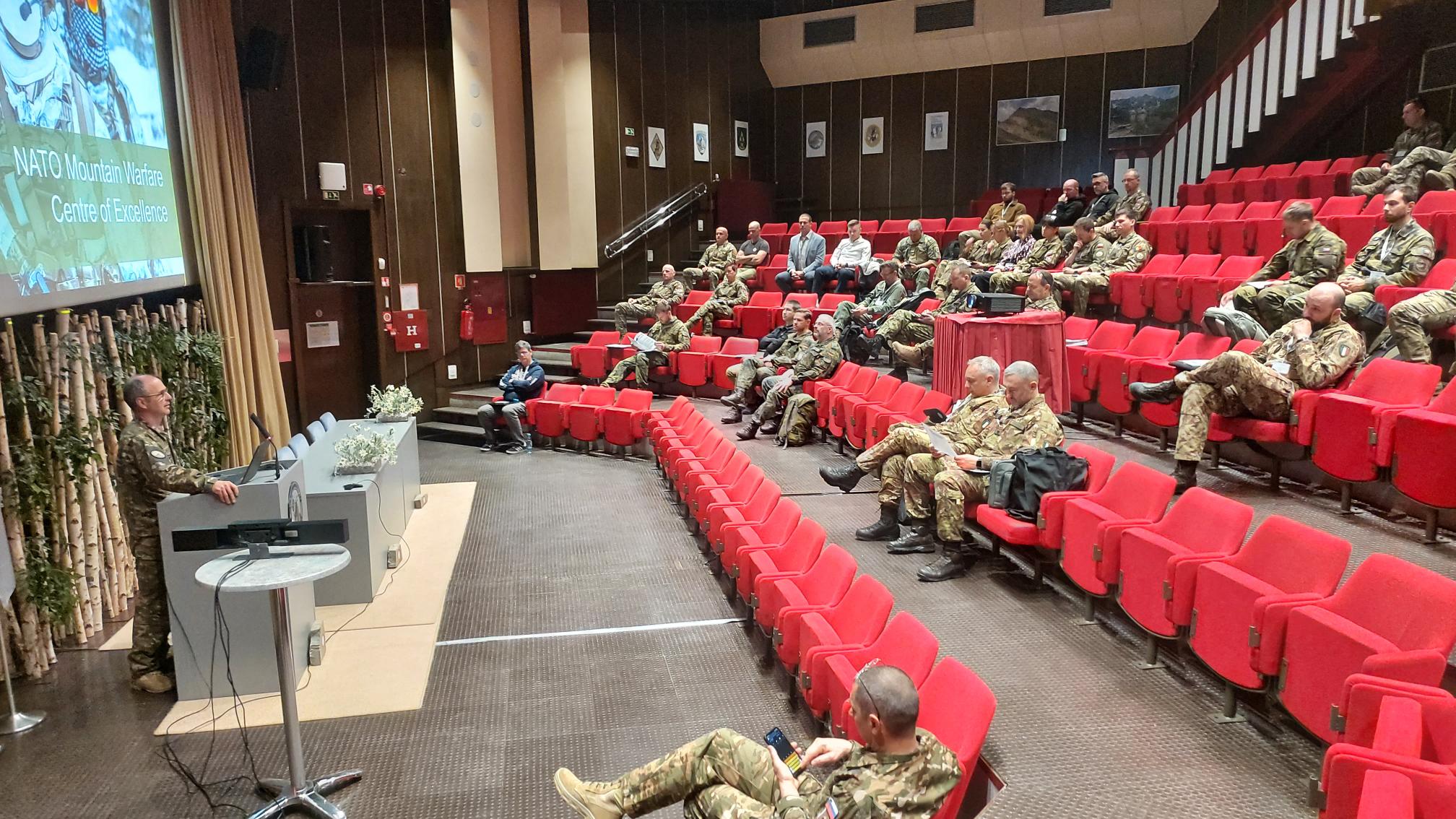
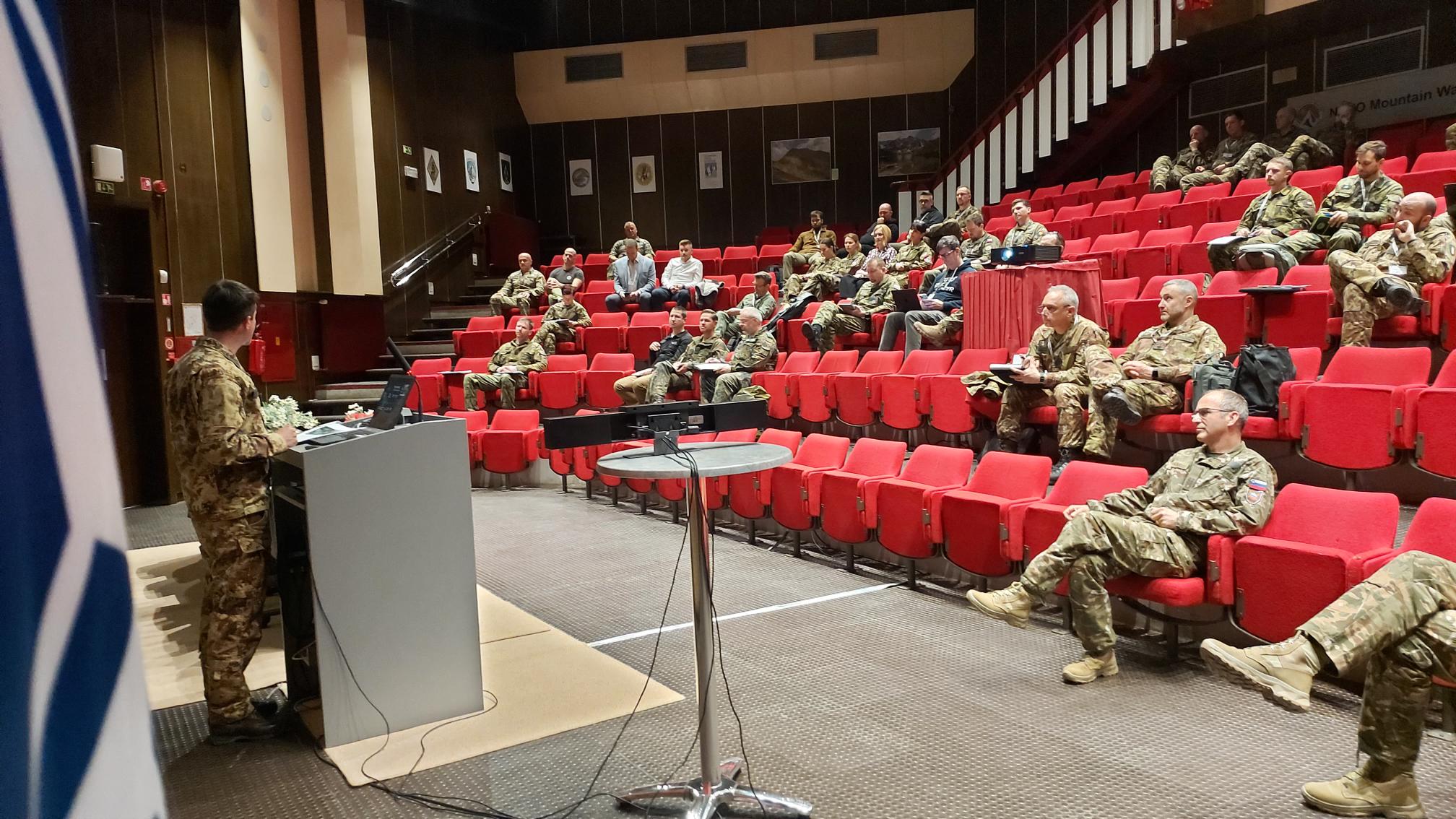
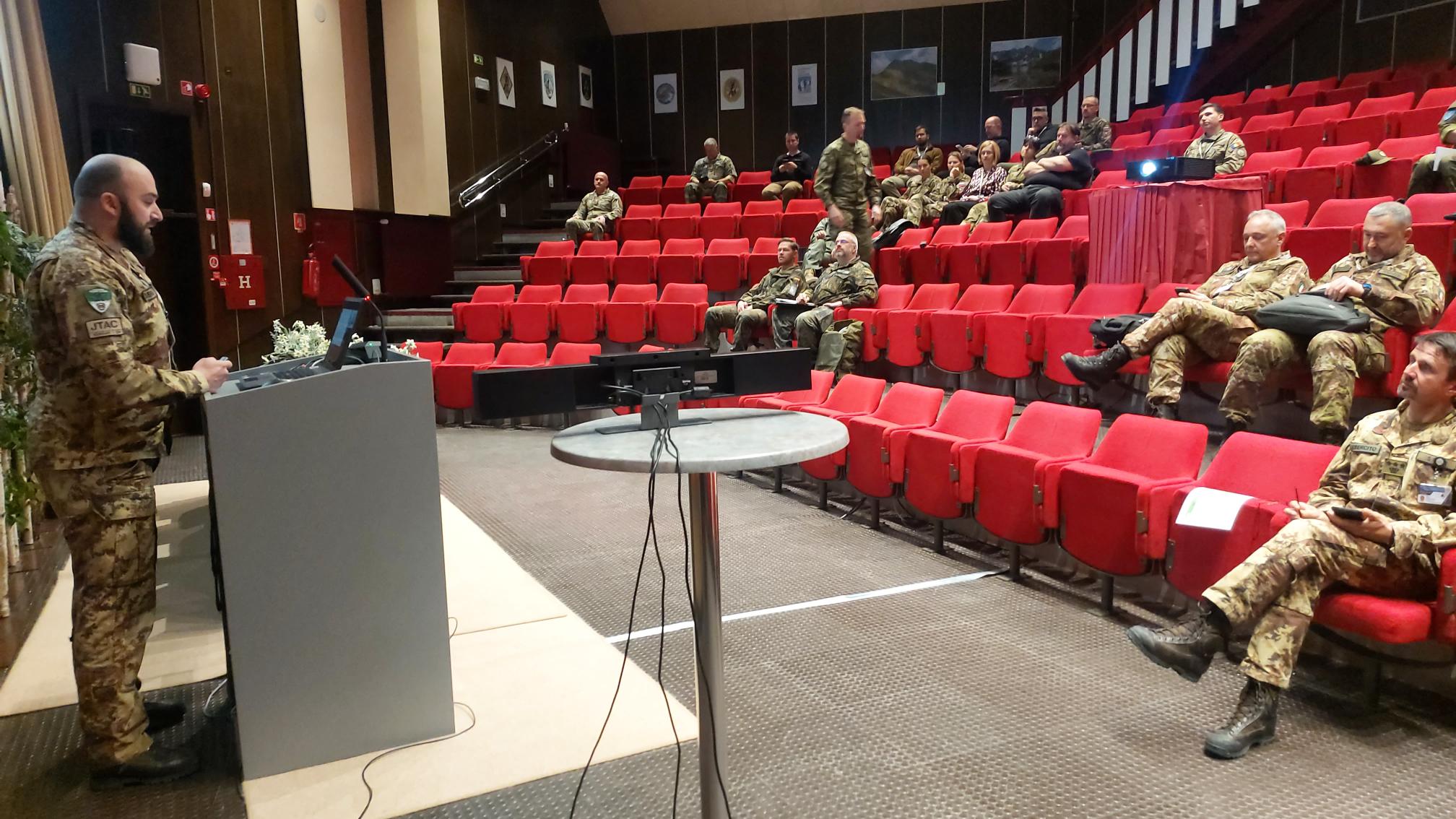
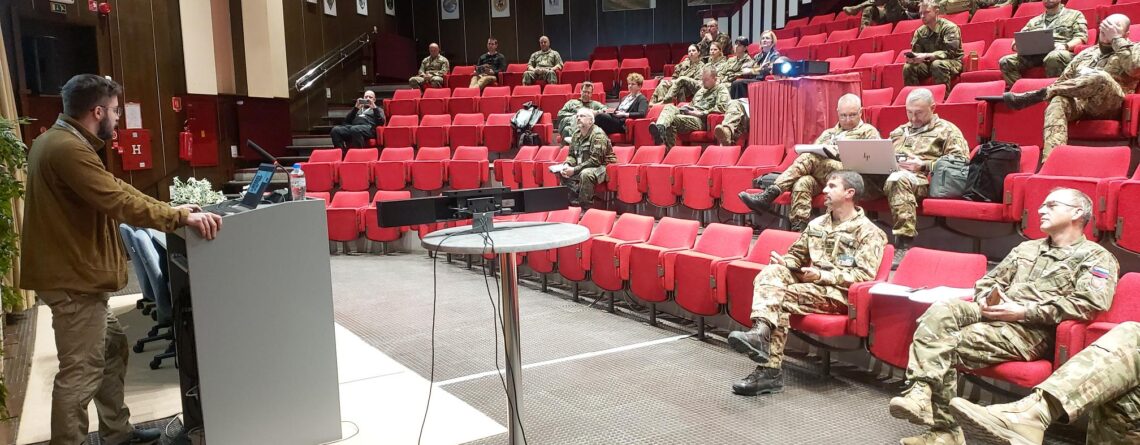
The NATO Mountain Warfare Centre of Excellence (MW COE) successfully conducted the workshop “Unmanned Systems in Mountain Warfare: Company Employment and Battalion Integration” on 25–26 March in Poljce, Slovenia.
Bringing together military practitioners, subject matter experts, and selected contributors from industry and civilian sectors, the workshop marked a significant step forward in understanding how unmanned systems are transforming operations in complex mountain terrain.
39 participants from 16 Nations were presents in person or on-line.
A Clear Reality Check
The workshop opened with a direct assessment of current conflicts, highlighting how drone warfare is no longer an emerging capability, but a decisive factor on the battlefield.
Participants broadly acknowledged that:
- Persistent ISR has significantly reduced the possibility of operating undetected
- Engagement cycles have been compressed, with rapid sensor-to-shooter timelines
- Cost asymmetry is reshaping tactical and operational decision-making
- GNSS-denied and electronically contested environments must now be considered the baseline
These observations confirmed that unmanned systems are not simply enhancing existing capabilities, but are fundamentally redefining how units operate, survive, and fight.
From Capability to Structure
A key outcome of the workshop was the recognition that the current approach to unmanned systems remains largely ad hoc and insufficiently structured.
Discussions highlighted the need for a cultural and organizational shift, including:
- Integration of FPV and UAS capabilities at company level as organic assets
- Establishment of battalion-level coordination functions to manage airspace, priorities, and integration
- Transition from centralized, high-end systems toward distributed, high-volume, and expendable capabilities
- Adoption of bottom-up innovation approaches, enabling rapid adaptation at the lowest tactical levels
Participants agreed that without formal integration into planning processes, including the Military Decision-Making Process (MDMP), unmanned systems will remain reactive rather than decisive.
Counter-UAS: A Critical Capability
The workshop also emphasized that the widespread use of drones has made Counter-UAS (C-UAS) a fundamental requirement, particularly in mountain environments.
Specific challenges identified include:
- Terrain-induced limitations on detection and tracking
- Airspace compression and increased risk of fratricide
- Degraded communications and increased vulnerability to electronic warfare
- Predictable movement corridors and limited concealment
Participants converged on the need for a layered, distributed C-UAS approach, combining:
- Passive survivability measures (dispersion, signature reduction)
- Sensors adapted to complex terrain
- Electronic warfare capabilities
- Kinetic and non-kinetic effectors
A proposed model highlighted a brigade-led, battalion-embedded structure, with organic capabilities extending down to company level.
Mountain Warfare as a Stress Test
The workshop confirmed that mountain environments act as a stress test for unmanned systems employment.
Compared to other operational environments, mountain warfare introduces:
- Severe constraints on line-of-sight and communications
- Increased electromagnetic and GNSS challenges
- Greater exposure due to channelized movement and limited cover
- Higher demands on coordination and airspace management
As a result, solutions developed for other domains cannot be directly transferred, reinforcing the need for mountain-specific TTPs and concepts.
Key Takeaways
Across all sessions, several key conclusions emerged:
- Unmanned systems must be treated as core combat capabilities, not enablers
- Company-level employment is decisive, but requires battalion-level integration
- Counter-UAS is not optional; it is essential for survivability
- Technology alone is not the solution — the primary gap lies in structure, training, and doctrine
- Speed of adaptation will be a critical factor in future operational effectiveness
Way Ahead
The results of the workshop will directly support ongoing MW COE efforts in:
- Development of Tactics, Techniques and Procedures (TTPs)
- Contribution to NATO doctrinal updates, including ATP and ATrainP-6
- Design of a dedicated training course on unmanned systems in mountain warfare
- Establishment of a network of experts to continue concept development
The workshop represents a transition from initial experimentation toward structured capability development, ensuring that NATO mountain forces remain effective in an increasingly drone-centric battlefield.
Conclusion
The discussions in Poljče made one point clear:
Unmanned systems are not simply changing mountain warfare — they are redefining it.
The challenge ahead is not whether to adopt these capabilities, but how quickly and effectively forces can adapt their structures, training, and mindset to integrate them.
The MW COE will continue to lead this effort, supporting Allied forces in preparing for the realities of modern combat in complex terrain.