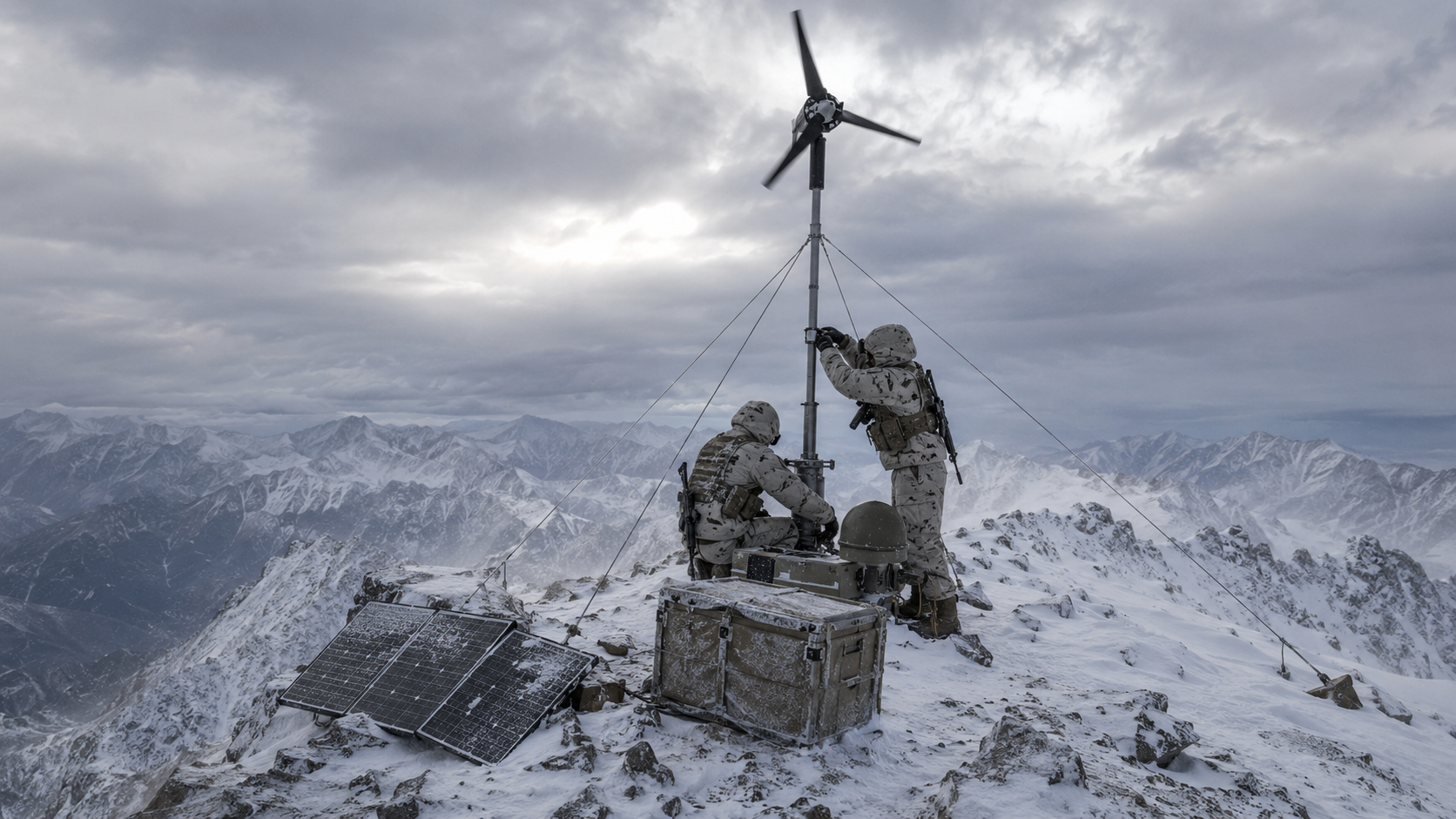
Mountain Warfare Technology Lab: Operational Energy in Mountain Warfare
Objectives:
- identifying energy-related capability gaps in mountain warfare
- fostering exchange between mountain warfare nations
- presenting innovative energy technologies
- discussing operational integration of energy solutions
- developing concepts for energy-autonomous mountain units
- TO SEE THE FULL PROGRAM CLICK THIS LINK
Activities:
Workshop: New technology challanges in the Mountain Warfare – Experts (Industry, Military, Academics) viewpoints, Wargaming (NATO Energy COE), Discussions.
Workshop will be partially streamed on line – via VTC for those unable to travel.
Benefit participating on the event itself you will be able to network with other experts and find the answers you have been looking for.
Official Program and Invitation will be posted on our site by the end of August 2026. Residential participation will be limited up to 100 people.
Participants:
SMEs from Mountain Warfare Schools, Mountain Units, Other NATO Military Units and HQ, experts from Civilian Organizations and Industry.
Event fee:
50 EURO
Project Officer:
LTC Igor Praznik
Doctrine & Standardization Branch
E-mail:igor.praznik@mwcoe.org, mobile phone: +386 30 300 049
“Energy has become part of combat power
Operational Energy in Mountain Warfare: Challenges and Opportunities for Future Mountain Forces was prepared to support discussion within the Mountain Warfare Community and at the NATO MWCOE workshop. Its central proposition is straightforward: a mountain unit’s technological advantage lasts only as long as its energy chain remains reliable. Electrical power now enables sensing, communications, navigation, decision-making, protection, medical support and uncrewed systems. It is therefore no longer only a logistics issue, but a factor that directly determines tempo, reach and freedom of action.
Radios, thermal sights, digital command-and-control systems, uncrewed aerial and ground systems, unattended sensors, electronic-warfare equipment and edge computing all improve unit effectiveness, but they create a continuous cycle of charging, battery replacement and resupply. Their load profiles differ significantly, ranging from persistent low demand to short, high-power surges. Unless these loads are planned as one architecture, advanced equipment may become unavailable at the decisive moment. Commanders must therefore estimate electrical consumption, peak power, charging requirements and resupply intervals with the same discipline applied to ammunition planning.”
Organizer
As one of the main missions of the NATO MW COE is to suggest improvements and propose amendments to existing doctrines, procedures and standards for subsequent endorsement by the Strategic Commands and/or NATO HQ, the Doctrine & Standardization Branch serves as a tool which analyses existing publications, seeks for incoherence and, when appropriate, provides proposals according to NATO Standardization Process. Based on Lessons Learned, primarily received from operations and exercises, the branch will develop new products, based on expressed needs within the Alliance.